 Totes
Helping a Parent Downsize: Using the Holidays to Plan the Move
- Don't spring it at the table. Talk one on one first, ask questions, and let your parent lead the decision.
- Use the visit for the things only in person works: a walkthrough, photos of every room and closet, and a conversation about who wants which family pieces.
- Leave with a plan on paper: a target season, one point person, and who handles what from out of state.
- A spring move is a common target, and a holiday conversation leaves a comfortable few months to plan.
A lot of downsizing moves at the shore start the same way. The family comes home for Thanksgiving or Christmas, and somebody notices the gutters haven't been cleaned, the basement stairs are getting harder, or the house is just a lot of house for one or two people now. Nobody says anything at dinner. Then everyone flies home.
The holidays are a good time to start this. Everyone is in the same place, you can see the house with your own eyes, and there's still plenty of time to plan before a spring move. Here's how to make that visit count.
The signs people usually notice
It's rarely one big thing. It's a handful of small ones that add up, and they're easier to see when you haven't been in the house for a few months.
- Whole rooms that don't get used, or a second floor your parent mostly avoids
- Upkeep slipping: the yard, the gutters, shoveling the walk
- Stairs at the front door, down to the laundry, or up to the bedrooms
- Your parent bringing it up themselves, often as a joke about the house being too big
None of these mean a move has to happen. They're just a reason to have a calm conversation instead of an urgent one later.
How to bring it up
The worst version of this conversation happens at the dinner table with everyone watching. The better version is one person, one on one, on a walk or over coffee the next morning.
- Ask, don't announce. "How are you feeling about the house these days?" opens a door. "We think you should move" closes one.
- Talk about what they want, not what they're losing. Less upkeep, being closer to friends or grandkids, a one floor place, more time for the things they actually enjoy.
- Let them set the pace. The first conversation is just the first one. It's fine if nothing gets decided this visit.
- Agree on one point person in the family so your parent isn't fielding five different opinions by text.
What to get done while everyone is home
If your parent is open to it, a holiday visit is the one time you can do the in person work that's hard to do from a distance.
- Walk the whole house together. Every room, closet, the attic, the basement, the garage and the shed. Most of the volume in a downsizing move is in the storage spaces, not the living room.
- Take photos and a quick video of everything. Siblings who couldn't make it can see what's there, and you'll have a record to plan from once everyone is home again.
- Talk about the family pieces, if your parent wants to. Let them lead it. With everyone home, it's the easiest time to find out who actually wants the dining set, the china, the piano or the cedar chest. Write it down. Things nobody claims can be sold or donated without guilt later.
- Find the important paperwork. The deed, insurance policies, tax returns, the will, any power of attorney and health care proxy, or at least know where each one is kept. Put the originals in one safe place now so nothing goes missing in the shuffle.
- Pick a target season. Not a date yet, just "spring" or "after the summer." It turns a vague idea into a plan.
For the sorting itself (what to keep, give, donate and toss, and how to measure the new place first), our guide to downsizing into a 55 and over community walks through it step by step.
Splitting the work when siblings live far away
It's common for one sibling to live nearby and end up doing everything. That burns people out fast. A few ways to share it more evenly:
- The local sibling handles the in person stuff: drop offs, donation runs and being there on move day.
- The out of state siblings take the phone and laptop jobs: researching communities, scheduling movers, booking the bulk pickup with the town, setting up utilities at the new place, listing furniture for sale.
- Everyone books a weekend during the sorting window, so the local sibling isn't alone for two straight weeks.
- Keep one shared list of tasks and who owns them, so nothing falls through the cracks.
Timing the move
A lot of families aim for late winter or spring. It's after the holidays, before the summer rush at the shore, and it leaves time to plan. Working back from a spring move date:
| When | What happens |
|---|---|
| Holidays | The first conversation, the walkthrough, photos, the family pieces list |
| January and February | Visit communities or apartments, talk to a realtor if the house is selling, settle on a date |
| 2 to 3 months out | Book movers. Spring dates fill up |
| About 6 weeks out | Schedule bulk pickup with the town and line up donation pickups |
| About 10 days before | Totes arrive. Sort the storage spaces first, then the living spaces |
| Move day and the days after | Unpack the essentials first, stack the empties, and we pick them up at the end of the 2 week rental |
If the move lands in December, plan earlier. Our winter moving guide covers how tight the holiday weeks get.
Help that's worth knowing about
- County aging offices. The Ocean County Office of Senior Services and Monmouth County's Division on Aging, Disabilities and Veterans Services can point families to local programs. The state keeps a list of every county office on aging with contact info.
- Senior move managers. These are professionals who help older adults sort, downsize and move. The National Association of Senior and Specialty Move Managers has a directory if your family wants hands on help.
- The community itself. If your parent is moving into a 55 and over community or a condo, ask the HOA or management about move rules early. Our condo moving guide has the questions to ask.
Where totes fit in
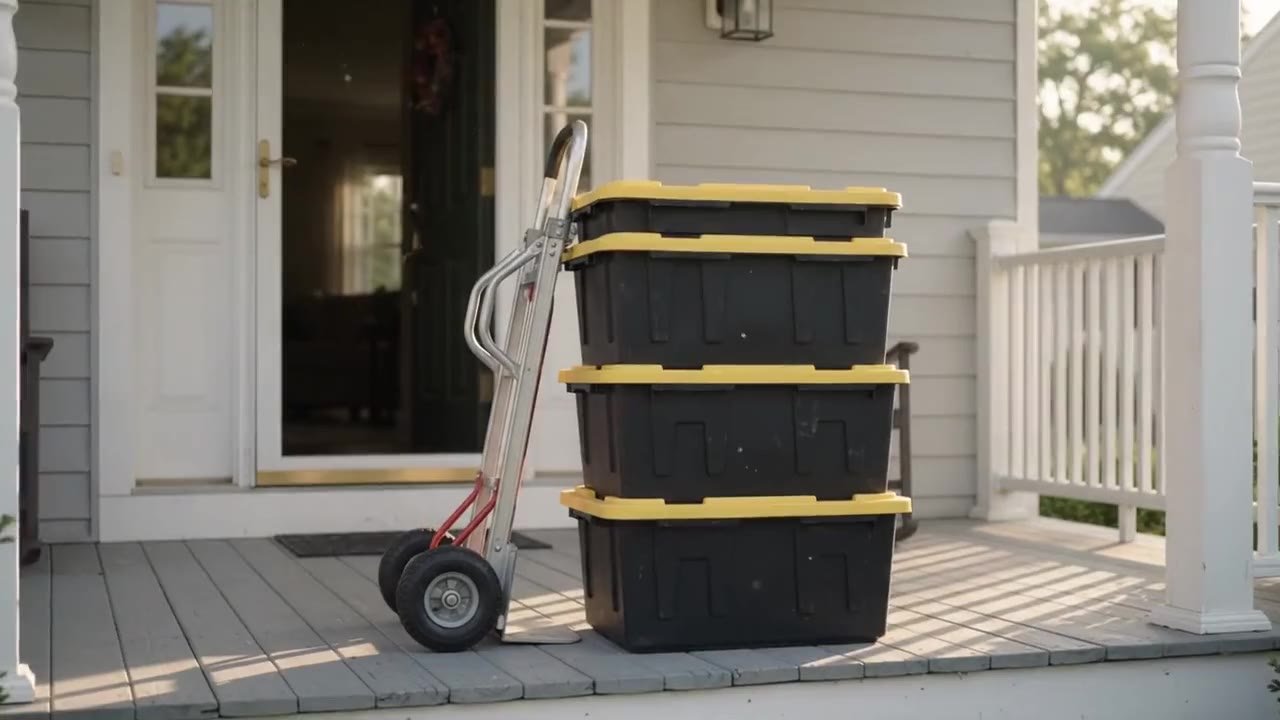
When the family is spread out, the logistics matter. Totes get dropped on your parent's porch and picked up when it's done, and nobody needs to be home for either, so the out of state sibling can book it and the local one doesn't have to wait around. Size the order to the house your parent is leaving, not the place they're moving to. For a lot of downsizing moves that's the 3 Bedroom package (60 totes), and if sorting runs long, an extra week on that package is $75.
Common questions
How do you bring up downsizing with an aging parent?
Talk one on one rather than in front of the whole family, ask how they feel about the house instead of telling them to move, focus on what they would gain, and let them set the pace. The first conversation doesn't need to end in a decision.
What should a family do during a holiday visit to plan a parent's move?
Walk the whole house together, take photos and video of every room and storage space, talk about who wants which family pieces while everyone is in one place, gather the important paperwork, and agree on a target season.
When is the best time of year for a downsizing move at the Jersey Shore?
Late winter or spring is a common target. It comes after the holidays and before the summer rush at the shore, and it gives the family a few months to plan after a holiday conversation.
How can siblings who live out of state help a parent move?
Take on the remote jobs: researching communities, scheduling movers, booking town bulk pickup, setting up utilities and listing furniture for sale. Each sibling can also plan one weekend in person during the sorting window.
How many moving totes does a downsizing move need?
Size it to the house your parent is leaving, not the new home. For a lot of downsizing moves that is the 3 Bedroom package of 60 totes.
Planning a parent's move?
Totes delivered to their door on a 2 week rental, picked up when it's done, and nobody has to be home for either. Anywhere in Ocean County and Monmouth County.