 Totes
How to Pack a Garage and Basement for a Move
- Pack these first. The garage and basement usually hold more volume than any other part of the house.
- Sort out what can't move: gasoline, propane tanks, pool chemicals and other hazardous stuff. Most movers won't take it.
- Monmouth County has a hazardous waste facility in Tinton Falls. Ocean County runs free collection days from spring into early November, and its recycling centers take paint.
- Wrap blades, bag small hardware with its tool, and keep heavy items to half a tote.
Every move has a moment where someone opens the garage door, or walks down the basement stairs, and goes quiet. These are the spaces where years of "I'll deal with it later" end up, and they almost always hold more than the bedrooms do.
They're also the trickiest to pack. Sharp tools, heavy hardware, half used cans of paint, holiday decorations, the camping gear, and a few things that aren't allowed on a moving truck at all. Here's how to handle all of it.
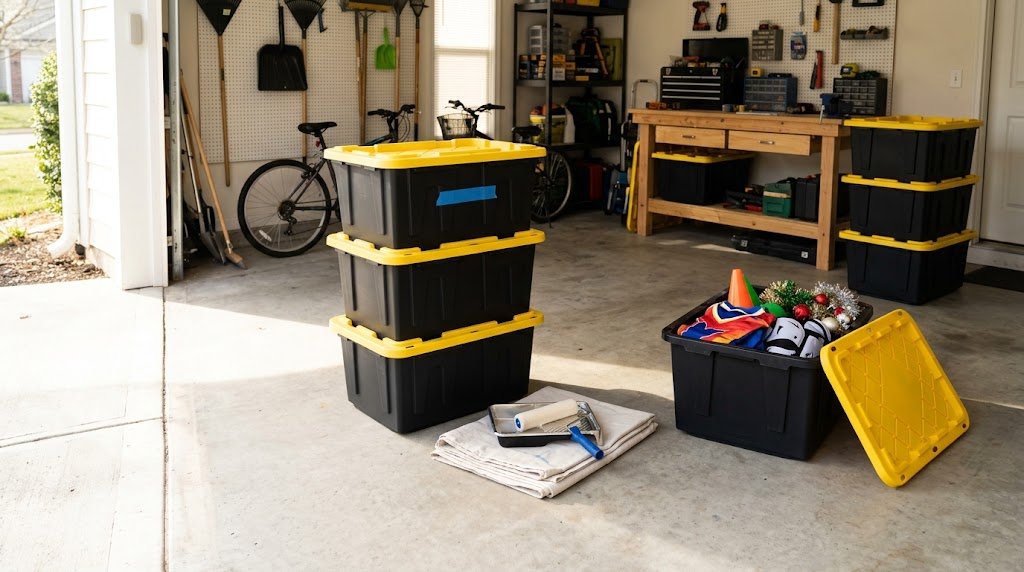
Start with these spaces, not the bedrooms
It feels backwards, but the garage and basement should be the first thing you pack once your totes arrive. Most of what's in them you won't touch before move day, they take the longest, and they're where you'll find the stuff you need to get rid of. Leave them for last and they'll eat your final weekend.
Before you pack anything, go through and pull out three groups: things that can't go on the truck, things you're getting rid of, and things that are coming. Only the last group goes in totes. Our sizing guide budgets 10 to 20 totes for the garage, basement and attic, and a really full one can push you up a package.
What movers usually won't take
Most moving companies won't load anything flammable, corrosive or pressurized, and you shouldn't put it in a closed moving truck yourself either. Plan to use up, give away or dispose of:
- Gasoline, plus the gas in the lawn mower, leaf blower and snow blower. Run them until the tank is empty, or drain the gas into an approved gas can and take it to a hazardous waste drop off. Never pour it out.
- Propane tanks from the grill. Give them to a neighbor who grills, ask your propane supplier, or check whether your county drop off takes them.
- Motor oil, antifreeze, car batteries and lighter fluid
- Fire extinguishers and ammunition
- Pool and spa chemicals
- Paint thinner, stains and polyurethane
- Pesticides, weed killer and fertilizer
- Aerosol cans and anything with a flammable label
If you're not sure about something, ask your movers before move day rather than finding out in the driveway.
Getting rid of paint and chemicals around here
Ocean County
Ocean County holds free household hazardous waste collection days at sites around the county. The season usually runs from spring into early November, it's for county residents only, and you need to register ahead of time. They take things like gasoline, pesticides, pool chemicals, stains and thinners. Moving between seasons? Both county recycling centers take paint at their special waste drop off: the Northern Recycling Center in Lakewood and the Southern Recycling Center in Manahawkin. Call ahead to confirm what they'll take, and check the county's hazardous waste program page for next season's dates.
Monmouth County
Monmouth County residents can bring household hazardous waste to the county's facility at 3211 Shafto Road in Tinton Falls, part of the Reclamation Center. It's for residents only, no appointment is needed, and there are limits per visit, so check the county's hazardous waste page for current hours and what's accepted.
Latex paint
Many New Jersey towns let you throw out latex paint with the regular trash once it's completely dried out, usually by mixing in kitty litter or sand and leaving the lid off. Oil based paint is a different story and goes to hazardous waste. Check your own town's public works page first.
How to pack the garage
Hand tools
If a tool has a case, use it. Otherwise wrap anything sharp (saws, chisels, pruners, utility knives) in a towel or cardboard and tape it, so nobody reaches in and gets cut. Bag small hardware like screws and drill bits in zip top bags and label them.
Power tools
Take the batteries out, keep them in their case or tape over the contacts, and carry them in your car. Remove blades and bits and wrap cords. Put each tool's small parts in a bag taped to the tool. Power tools are heavy, so pad them with rags and keep it to a few per tote.
Long handled stuff
Rakes, shovels, brooms and hockey sticks are too long for a 27 gallon tote. Bundle them together with tape or bungee cords and load them on the truck as one piece.
Sports and outdoor gear
Balls, gloves, helmets, beach chairs and camping gear go in totes by sport or by season. Bikes and kayaks ride on the truck as is, but put the pedals, pumps and paddles in a labeled tote so they show up together.
Holiday decorations
Wrap fragile ornaments individually in tissue or paper, wind light strings around a piece of cardboard so they don't tangle, and pack each holiday in its own totes. If you're downsizing, this is a good time to keep the favorites and pass along the rest.
How to pack the basement
Basements at the shore tend to be damp, and that changes how you pack. Plenty of shore homes, especially on the barrier islands, have a crawl space or a shed instead, and the same rules apply there.
- Only pack things that are fully dry. Anything damp sealed in a closed plastic tote can mildew, even over a couple of weeks. Clean and dry anything musty first.
- Get things off the floor. Old cardboard boxes stored down there are often soft on the bottom. Unpack them into totes instead of trying to move a box that might give out.
- Paperwork and photos go in closed totes and ride in your car if they matter.
- Bulk items like an old couch, a broken treadmill or a dehumidifier that's done should go to your town's bulk pickup. Book it early, since some towns schedule it weeks out or only a few times a year.
Heavy stuff and the dolly
Garage stuff is dense. A tote full of hand tools or tile can get heavy fast. Put heavy items on the bottom, fill heavy totes only about halfway, and top them off with light things like rags or gloves. A dolly ($10 per dolly) lets you roll a stack out of the basement or across the garage instead of carrying one tote at a time.
Label for the garage you're moving into
Label each tote with where it goes in the new place, not just what's in it: Garage, wall shelf or Basement, holiday. If the new place has less storage, say a smaller garage or no basement, decide what's going where before move day so it doesn't all end up in a pile.
Packing the rest of the house? See how to pack a kitchen and how many totes you need.
Common questions
What won't movers take from a garage?
Most movers won't load anything flammable, corrosive or pressurized. That includes gasoline, propane tanks, motor oil, car batteries, pool chemicals, paint thinner and stains, pesticides and fertilizer, and aerosol cans. Ask your movers if you're not sure about an item.
Where can I get rid of household hazardous waste in Ocean County, NJ?
Ocean County holds free household hazardous waste collection days for residents at sites around the county, usually from spring into early November, with registration required. Between seasons, the Northern Recycling Center in Lakewood and the Southern Recycling Center in Manahawkin take paint at their special waste drop off.
Where can I get rid of household hazardous waste in Monmouth County, NJ?
Monmouth County residents can use the county household hazardous waste facility at 3211 Shafto Road in Tinton Falls. No appointment is needed. Check the county website for current hours and accepted items.
Can I throw away latex paint in New Jersey?
Many New Jersey towns allow fully dried latex paint in the regular trash, usually dried out with kitty litter or sand and the lid left off. Oil based paint should go to household hazardous waste. Check your town's rules first.
How do you pack tools for a move?
Use original cases when you have them, wrap anything sharp in a towel or cardboard, take blades and batteries off power tools (tape the battery contacts and carry them in your car), bag small parts with their tool, and keep heavy tool totes only about half full.
Tackling the garage first?
Sturdy 27 gallon totes that stack in the garage, a dolly for the heavy ones, and delivery and pickup included anywhere in Ocean County and Monmouth County.